
Awareness, consideration and conversion are the foundation of the traditional marketing funnel. But today’s B2B buyers don’t always move through these stages in a straight line, especially across B2B marketing channels where social media plays a central role. Social platforms introduce new touchpoints, new behaviors and non-linear paths that influence how prospects discover, evaluate and choose brands.
To better align with this reality, marketers are expanding the classic model into five key marketing funnel stages designed specifically for social media: awareness, consideration, conversion, engagement and advocacy. Each stage represents a distinct moment in the customer journey where social content, community-building and real-time interaction can help move buyers forward.
Key Takeaways
- The five marketing funnel stages — awareness, consideration, conversion, engagement and advocacy — look different on social media than in traditional models.
- Social content guides buyers through each stage by delivering value, answering questions and building trust.
- Engagement and advocacy matter in B2B social funnels because they strengthen retention and long-term customer relationships.
- A strategic mix of educational content, interaction and community-building helps move prospects through each stage more effectively.
The Five Marketing Funnel Stages Explained
Understanding how buyers move through the five marketing funnel stages is essential for building a social media strategy that drives real results. Here’s a quick overview of each stage before we dig into how they work within a modern B2B social media funnel:
- Awareness: making buyers aware of your product as a solution to a specific pain point or problem
- Consideration: buyers are considering your solution instead of competitors’ solutions
- Conversion: customer makes a final purchase decision
- Engagement: staying top of mind with the customer post-purchase
- Advocacy: customers become authentic brand advocates and recommend you to others
Social media shapes a different customer journey than traditional sales channels, and it doesn’t always follow a strict path. Organic efforts can guide most B2B audiences through these five stages to create awareness and build trust.
Stage 1: Awareness
The journey begins at the top of the funnel. At this stage, the goal is to make potential buyers aware of your brand and offerings. Start by identifying a common pain point for your target audience and then explain how your product offers a solution. This stage is not about pitching your product line — it’s about establishing your brand in the buyer’s mind in a way that improves the odds of recall.
Blog posts, short video tutorials and thought leadership articles are some of the best forms of content to feature at this stage. Social channels can effectively distribute this content to your audience in a more digestible, shareable format.
Awareness Example: commercetools
commercetools, a cloud-based commerce platform company, tasked Walker Sands with creatively raising brand awareness and establishing credibility with decision-makers. Walker Sands recommended a bold, challenger campaign that positioned commercetools as the modern alternative to clunky legacy platforms, empowering innovators to leave “monolithic” tech behind.
The team also used humor, sharp copy and scroll-stopping visuals to dramatize the gap between big ideas and outdated systems, then distributed the campaign across paid social and video to meet buyers where they already consume industry content. The result was top-of-funnel creative that stuck in prospects’ minds and made it far more likely they would recognize and trust the commercetools brand as they moved deeper into the funnel.
Stage 2: Consideration
After awareness comes the consideration stage. At this point in the journey, buyers are researching your offerings and comparing them to competitors’ offerings. This is where content should answer detailed questions, address objections and help buyers assess fit. Helpful, informative types of content includes webinars, white papers, case studies, testimonials and product reviews.
Stage 3: Conversion
The conversion stage is when a buyer initiates and ideally completes a purchase. Promotions, product points of differentiation and retargeting are key at this stage across social channels. While discounts are not consistently employed in most marketing campaigns, slight markdowns or risk-free trial periods offered via social media can boost conversions. Use social listening and customer feedback to address common hesitations that may arise during this time. By allowing hesitations to inform social copy, you can give buyers the confidence they need to move forward with the purchase.
Stage 4: Engagement
During the engagement stage, the goal is to reduce buyer remorse and help customers feel supported in product implementation. Brands often overlook this stage, which can hurt retention and limit repeat purchases.
Use social channels, in-app messaging and personalized follow-ups to share how-to content, best practices and quick tips that help them see value faster. When customers feel heard, informed and connected to a broader community, they are far more likely to stay engaged and continue choosing your brand.
Engagement Example: Bill.com Social Campaign

Walker Sands created a multi-channel social media campaign for Bill.com that engaged defined audiences using storytelling and visuals. By highlighting a Quicken client use case across Instagram, LinkedIn, Twitter and Facebook, the program generated high engagement (impressions, interactions and follow growth). The campaign sparked meaningful conversations in comments and DMs, giving Bill.com fresh insight into customer needs and new opportunities to nurture relationships after the initial click.
Stage 5: Advocacy
It’s important to think beyond conversion and consider the advocacy stage. Here, the goal is to turn satisfied customers into brand advocates. As customers voice their positive experiences with your brand, they influence their networks to also trust you. Collecting reviews and testimonials is vital at this stage.
You can also encourage user-generated content, spotlight customer success stories on social and invite loyal customers into referral or ambassador programs. When advocacy is nurtured intentionally, your happiest customers become a powerful extension of your marketing team, fueling trust and credibility that marketing efforts alone can’t match.
Advocacy Example: Semrush Twitter Program
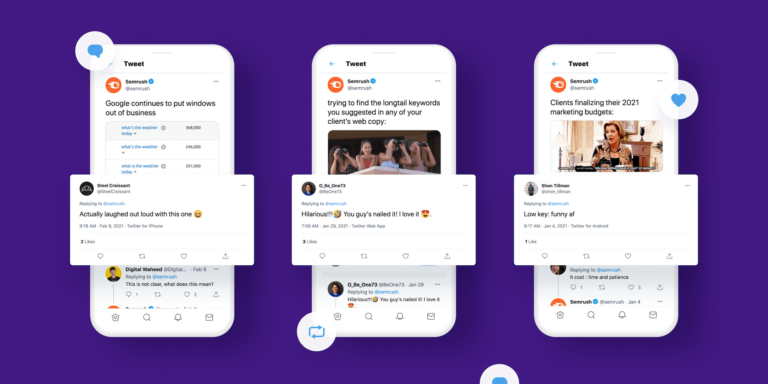
Walker Sands helped Semrush evolve its social media presence by crafting timely, entertaining microcontent that resonated deeply with its audience. By injecting personality into official social channels and interacting directly with users (e.g., memes, trends, conversational posts), the brand created advocacy-driven engagement where followers began championing the brand organically (e.g., users commenting on tone improvements).
Bringing All Marketing Funnel Stages Together
Social media serves a distinct function at each stage of the funnel but investing in every point of the journey ensures your brand reaches buyers in a genuine and impactful way. From building brand awareness to creating lifelong brand advocates, incorporating social media into your marketing funnel helps your customers feel a deeper connection to your brand.
If you want B2B social media marketing that drives real business results, Walker Sands can help. Contact our team of experts today to learn more.
Marketing Funnel Stages FAQs
What are the 5 stages of the marketing funnel?
The five stages of the marketing funnel are Awareness, Consideration, Conversion, Engagement and Advocacy.
How does a social media marketing funnel differ from a traditional marketing funnel?
A social media marketing funnel is less linear than a traditional funnel. It creates ongoing touchpoints where brands can educate buyers, build trust, encourage engagement and support advocacy.
How can social media support a non-linear B2B buyer journey?
Social media supports a non-linear B2B buyer journey by keeping brands visible across research, evaluation and decision-making moments. It helps buyers engage with helpful content whenever they need it.
How can brands use social media to shorten the consideration stage?
Brands can shorten the consideration stage by using social media to answer buyer questions, address objections and share proof points like case studies, testimonials and product explainers.
What types of social content build trust with B2B buyers?
Social content that builds trust with B2B buyers includes thought leadership, customer stories, case studies, testimonials, educational videos and data-backed insights.


